
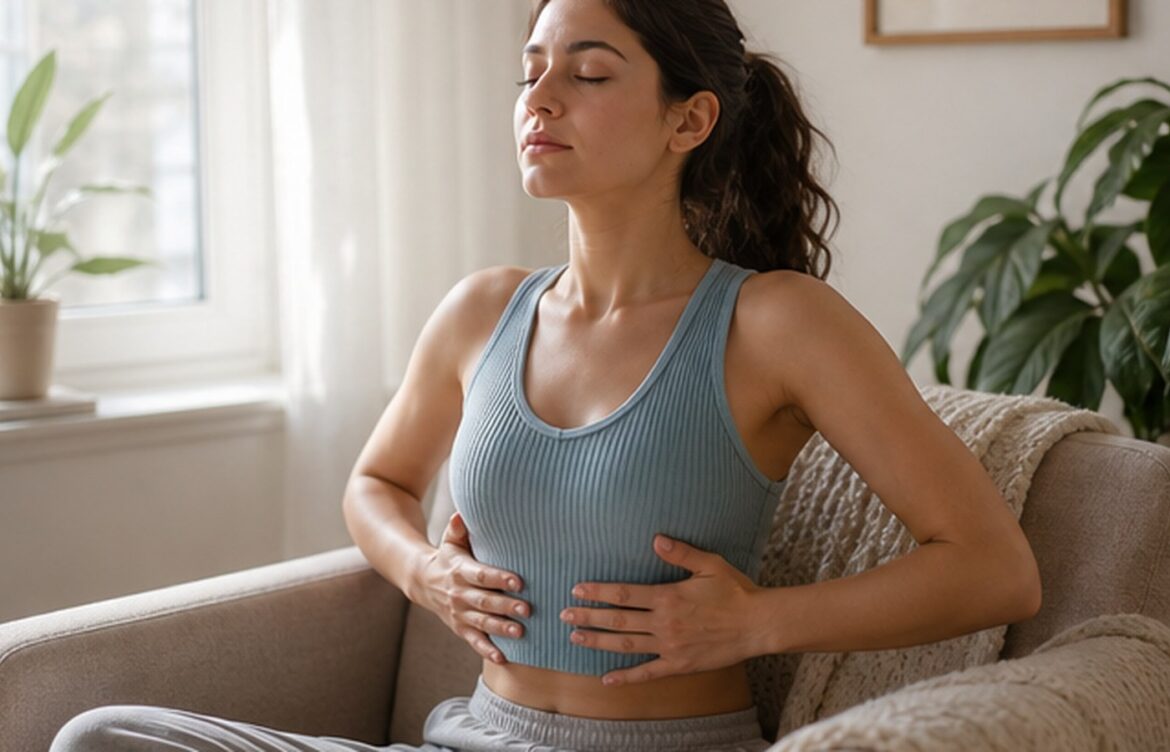
Box Breathing Technique: A Four-Step Stress Reset
Box breathing is a simple paced-breathing exercise built around four equal phases: breathe in, hold, breathe out and hold again. People often use it as a brief pause before a stressful meeting, during a busy day or as part of an evening wind-down. It is free, takes only a few minutes and needs no equipment—but it should feel gentle, never forced.
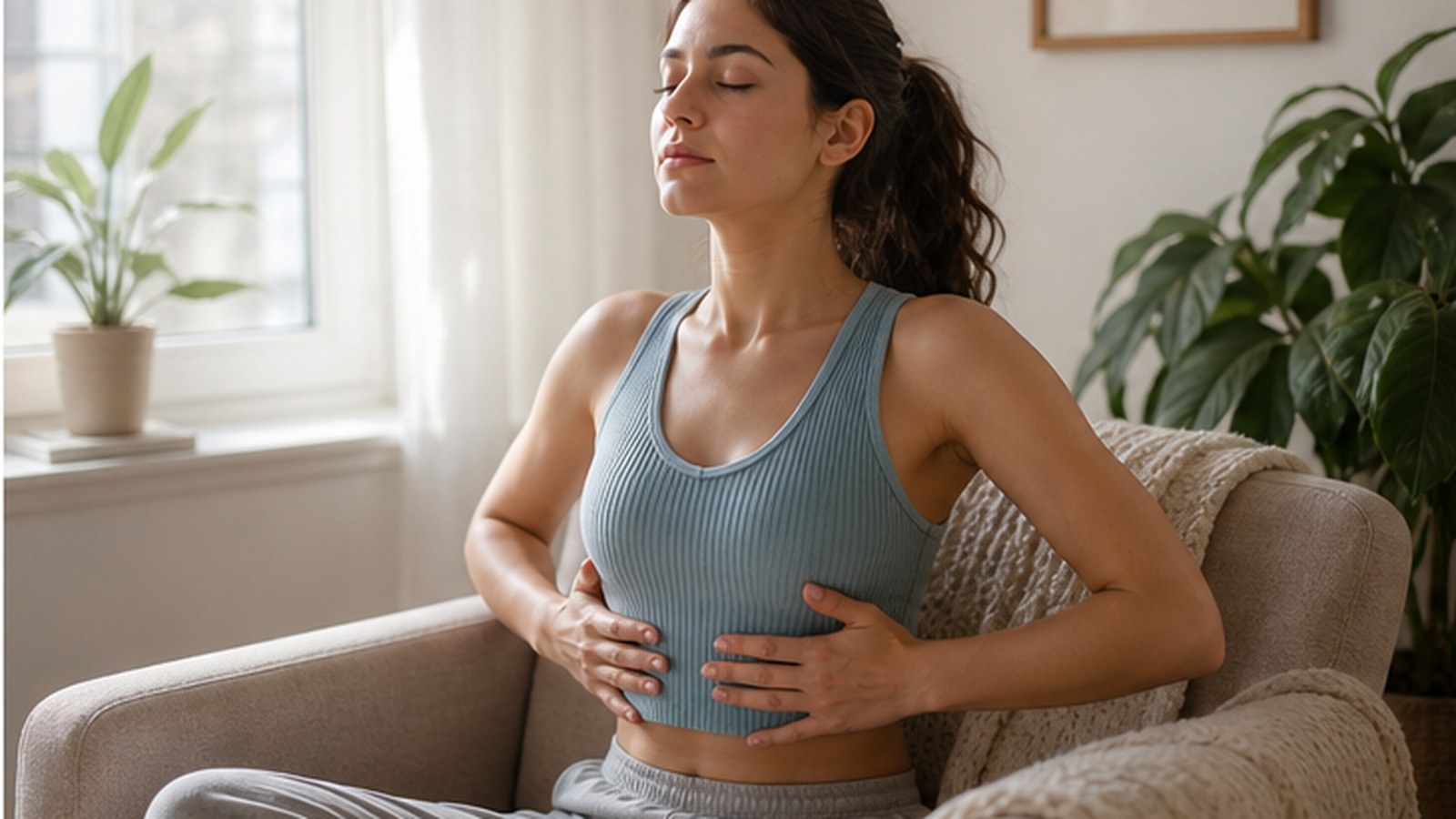
Quick answer: Start with a comfortable three- or four-count rhythm for four cycles. If breath-holding feels unpleasant, skip the holds and use a smooth, even inhale and exhale instead.
What is the box breathing technique?
Imagine tracing the four sides of a square. Each side represents one part of the breath: inhale, pause, exhale, pause. A common pattern uses four counts for each side, which is why the method is also called four-square breathing. The count is a guide rather than a target; comfort matters more than reaching four.
How to do box breathing in four steps
- Settle your posture. Sit with your back supported or stand comfortably. Let your shoulders drop and loosen tight clothing around your waist or chest.
- Inhale gently. Breathe in through your nose for a slow count of four. Keep the breath quiet instead of taking the biggest breath possible.
- Pause comfortably. Hold for up to four counts without straining.
- Exhale and pause. Breathe out slowly for four counts, then pause for up to four. Repeat for four cycles.
If four counts feels too long, try three. If holding your breath creates tension, use a gentle three-count inhale and four-count exhale with no pauses. Stop and return to normal breathing if you feel dizzy, light-headed, numb, panicky or short of breath.
What box breathing may—and may not—do
Slow breathing and focused attention are used in many relaxation practices. The U.S. National Center for Complementary and Integrative Health explains that relaxation techniques aim to support the body’s relaxation response, but evidence for treating specific health conditions is limited. Box breathing may help you create a moment of focus or calm; it is not a cure for anxiety, insomnia, trauma, high blood pressure or any breathing disorder.
The NHS recommends practising calming breathing regularly and allowing the breath to move as deeply as is comfortable without forcing it. Think of box breathing as one small self-care tool, not a test you have to pass.
When to use box breathing
- Before a presentation, interview or difficult conversation
- After closing your laptop to mark the end of the workday
- While waiting for an appointment or delayed journey
- As part of a screen-free bedtime routine
- Before journalling, stretching or meditation
Linking the exercise to an existing cue makes it easier to remember. For example: “When I sit at my desk, I will complete four comfortable cycles before opening email.”
Common mistakes to avoid
- Taking oversized breaths: bigger is not necessarily better and may make you light-headed.
- Forcing the hold: shorten or remove it when it creates air hunger.
- Rushing the count: choose a naturally slow pace rather than racing to finish.
- Expecting an instant cure: a brief breathing practice cannot replace appropriate mental or physical healthcare.
- Practising in an unsafe situation: do not use breath-holding while driving, in water or anywhere reduced attention could put you at risk.
Who should take extra care?
Ask a qualified healthcare professional before using breath-holding exercises if you have a respiratory or heart condition, a history of fainting, are pregnant and unsure what is appropriate, or notice symptoms with breathing practice. Some relaxation techniques can increase anxiety or bring up distressing thoughts, particularly for people with trauma histories. Keep your eyes open, orient yourself to the room and stop if the practice feels unsettling.
Seek urgent medical help for new or severe trouble breathing, chest pain, fainting, blue or grey lips, confusion or other emergency symptoms. Do not use box breathing to delay medical care.
Frequently asked questions
How many rounds of box breathing should a beginner do?
Four comfortable cycles are enough for a first attempt. You can gradually practise for one to three minutes if you remain relaxed and symptom-free.
Can box breathing help with sleep?
It may be a useful wind-down cue, but evidence for relaxation techniques alone as a treatment for chronic insomnia is limited. Persistent sleep problems deserve a broader assessment; cognitive behavioural therapy for insomnia is a well-established first-line approach.
Is box breathing the same as deep breathing?
Not exactly. Box breathing uses equal timed phases and optional holds. General calming breathing may use a continuous, comfortable inhale and exhale without pauses. Choose the pattern that feels easiest.
Key takeaway
Use a soft breath, a comfortable count and only a few cycles. The goal is not perfect timing; it is a brief, repeatable pause that leaves you feeling steady. Stop if symptoms appear, and get professional support for severe, persistent or worsening anxiety, sleep or breathing concerns.
Sources and further reading
Reviewed for clarity and source relevance on August 16, 2026. Educational information only; it does not replace individual medical advice, diagnosis or treatment.